Sunday, July 31, 2016

My Exit Strategy
Simply based on the type of person I am, I know I tend to lose interest when I'm doing the same thing for an extended period of time. Because of this, I believe I would sell my venture after several years and move on to something new.
I don't believe my exit strategy had much of an impact of my selected venture, I chose it simply as something that I have a personal interest and passion about. I believe the model I set up would be successful long term, as I wouldn't want to create something that couldn't last past my ownership. I think there's a problem these days of entrepreneurs creating businesses with weak foundations because their intention is to sell of the business at the first opportunity to the highest bidder. Many brilliant ideas have been lost or held back due to this kind of entrepreneurship, and I wouldn't want to contribute to such a system.

I don't believe my exit strategy had much of an impact of my selected venture, I chose it simply as something that I have a personal interest and passion about. I believe the model I set up would be successful long term, as I wouldn't want to create something that couldn't last past my ownership. I think there's a problem these days of entrepreneurs creating businesses with weak foundations because their intention is to sell of the business at the first opportunity to the highest bidder. Many brilliant ideas have been lost or held back due to this kind of entrepreneurship, and I wouldn't want to contribute to such a system.

Sunday, July 24, 2016
Celebrating Failure
An activity I've recently picked up is playing Escape Room games. You and a team are placed inside a room with a locked door, and you have to go through a series of puzzles, hidden doors, riddles and so forth in order to escape the room within 60 minutes. No matter how close you might be to winning, if you don't make it out in time you've failed, so it's a very binary feeling of accomplishment or disappointment at the end.

It took a couple of attempts in different rooms before I started getting the hang of it. Without any prior experience, it took some time for my friend and I to get into the right mindset for how to go about solving the room, and it required a lot of trial and error. But after each failure I felt I'd gained some valuable insight to keep in mind for the next attempt, and I also felt a renewed sense of determination that I was definitely going to succeed the next time.
I'm generally a little bit a perfectionist, and it can actually be a deterrent against trying new things if I don't believe I can do them to my own satisfaction. Failure is a difficult thing or me to accept, and I end up dwelling on it for a long time afterwards trying to figure out it could've been avoided. Some of my experiences in this class have forced me to accept the potential of failure a little more, and try to not feel too much disappointment if I'm not able to do something perfectly right away.
Saturday, July 16, 2016
The Amazon Whisperer
Revenue Driver:
1. Rent paid by developers
2. Membership fees from consumers
3. Sales of VR/AR equipment and peripherals
4. Sponsorship deals with outside developers/manufacturers
Next thing:
High quality wireless audio systems.
These will allow customers to enhance their VR/AR experiences by allowing them to feel more immersed in their headsets without an additional piece of equipment (headphones) on their heads. It will also help to better simulate the effect of truly being in a different environment, as the audio sounds more natural when it's filling an entire space.
Example: Sonos Playbar
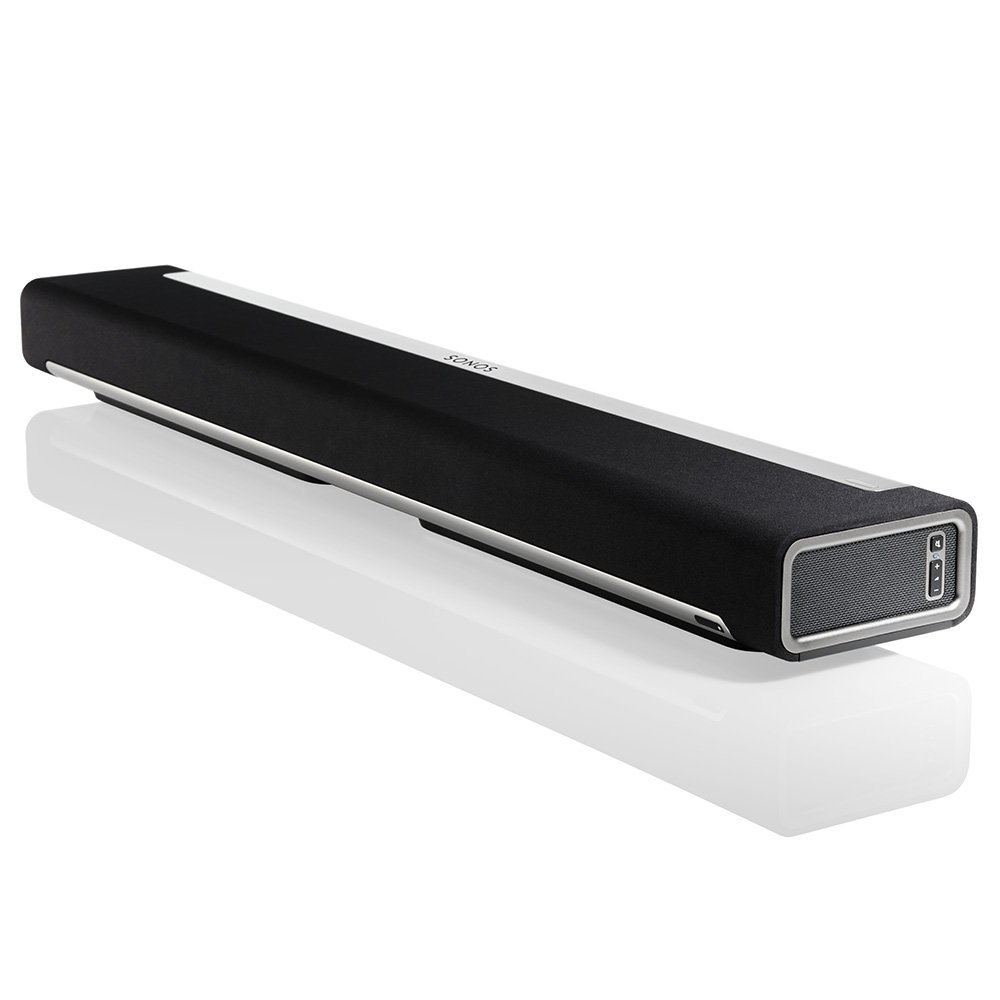
The Sonos Playbar has excellent reviews, with 83% of customers giving it 4-5 stars. Unfortunately this device is not wireless, at it requires an optical audio cable, so there would be a limited ability to place it around the room. It would be better to have a truly wireless option to allow for the best positioning without limitation.
The quality of this product is very high, and is perfect for the current target market of VR adopters who will be slightly more affluent than the average person.
1. Rent paid by developers
2. Membership fees from consumers
3. Sales of VR/AR equipment and peripherals
4. Sponsorship deals with outside developers/manufacturers
Next thing:
High quality wireless audio systems.
These will allow customers to enhance their VR/AR experiences by allowing them to feel more immersed in their headsets without an additional piece of equipment (headphones) on their heads. It will also help to better simulate the effect of truly being in a different environment, as the audio sounds more natural when it's filling an entire space.
Example: Sonos Playbar
The Sonos Playbar has excellent reviews, with 83% of customers giving it 4-5 stars. Unfortunately this device is not wireless, at it requires an optical audio cable, so there would be a limited ability to place it around the room. It would be better to have a truly wireless option to allow for the best positioning without limitation.
The quality of this product is very high, and is perfect for the current target market of VR adopters who will be slightly more affluent than the average person.
Elevator Pitch No. 3
The only feedback received on my previous post in regards to how I might improve the pitch was from one person who said they didn't quite understand what VR was, and so they were slightly confused at the end of the pitch. Given the time limitations of this exercise, and the fact that I'm already pushing the upper limit of this, I was unable to find any room to trying and work an explanation of the technology itself into the presentation.
Part of the venture itself is to give the public better exposure to VR, as a lack of understanding or experience with the technology is the exact barrier I believe needs to be overcome. The complexity and need to be "experienced rather than explained" of VR and AR as a whole is exactly what makes the explanation during an elevator pitch difficult.
I believe this pitch will always be unsuccessful to anybody without even at least a passing knowledge of VR, and so that must be something I'll always need to take into account when considering who I choose to pitch to. With all that in mind, I believe my last elevator pitch is exactly where I would like it to be.
Sunday, July 10, 2016
Idea Napkin No. 2
1. Me:
I've worked in retail and consumer electronics for 10 years, in areas of sales, service, management and operations. I have a passion for technology and innovation, and want to be able to share and spread this enthusiasm with the wider public.
2. What I'm offering:
For the public, I'm offering access to, and experience with, new technological innovations. For business, I'm offering access to customers, by means of a public facing showroom of in-development technology, and an environment facilitating their development of new products.
3. Who I'm offering this to:
Target audiences will initially be middle to upper class, young to middle aged. "Gadget" technology tends to first be adopted early by males, partially driven by the heavily male development teams creating experiences appealing to males. Over time, this demographic will broaden as the technology becomes more widely available and lower in cost, and the variety of experiences increases.
4. Why they care:
People are always curious about the newest technologies, and most want to at least experience something they've heard about, even if they aren't interested in purchasing. Achieving that initial interest is the first step, and once you have the customer actually trying out a product it becomes much easier to convince them of the actual utility. Much of this utility will be unfolding over the next several years, due to how new the technology currently is.
5. Core competencies:
Passion for the product, experience in retail, sales and customer service, technical knowledge, the ability to demo products for customers before sale.
I believe my experiences and knowledge are greatly beneficial to this type of venture. One area I may struggle with, I tend to be great at putting together an overall big picture and making "large" decisions, but the normal minutia involved in day to day operations becomes a drag and I have no interest, so I'm liable to overlook these.
I only received one comment, which recommended I elaborate on how to provide access to customers for the developers.
Reading Reflection No. 2
How to Fail at Almost Everything and Still Win Big, by Scott Adams
1. The general theme of the book is that it's a good idea to create systems for oneself to follow in order to work steadily towards success, rather than simply having a goal and hoping to achieve it.
2. The book gave many examples of the entrepreneurial efforts of Scott Adams, most of which have been complete failures, but each provided a valuable addition to his skills, knowledge, or network that enabled him to ultimately succeed once he had discovered the right combination of idea, connections and timing.
3. A good exercise would be to think of a possible goal that one has, and try to think of the types of consistent behaviors one might be able to undertake that would allow you to steadily move in the direction of the goal. Creating a system to follow which gives a sense of progress, rather than just aiming at a goal.
4. One of my biggest surprises was the sheer number of horrible ideas that Scott Adams had for various business enterprises, and how he still seems to think the ideas are good even though I couldn't imagine them working whatsoever. All it really takes is that one idea that connects.
1. The general theme of the book is that it's a good idea to create systems for oneself to follow in order to work steadily towards success, rather than simply having a goal and hoping to achieve it.
2. The book gave many examples of the entrepreneurial efforts of Scott Adams, most of which have been complete failures, but each provided a valuable addition to his skills, knowledge, or network that enabled him to ultimately succeed once he had discovered the right combination of idea, connections and timing.
3. A good exercise would be to think of a possible goal that one has, and try to think of the types of consistent behaviors one might be able to undertake that would allow you to steadily move in the direction of the goal. Creating a system to follow which gives a sense of progress, rather than just aiming at a goal.
4. One of my biggest surprises was the sheer number of horrible ideas that Scott Adams had for various business enterprises, and how he still seems to think the ideas are good even though I couldn't imagine them working whatsoever. All it really takes is that one idea that connects.
Sunday, July 3, 2016
Elevator Pitch No. 2
The feedback received of my first pitch was very positive. I decided to explain the idea a little more in this pitch, give a better picture of the final goal.
My Customer's Avatar
The traits my customer would have:
Gender: Skewed towards male
Age: mid-teens to early 40's
Interests: technology, movies, music, video games, computers.
Economic class: Middle to Upper class
Physical limitations: At a minimum, customers must be able to see reasonably well with the aid of glasses or contact lenses.
As VR Technology is still in its nascent phase, the potential uses for it are just now being created and explored. The potential customer will certainly expand over time beyond those with an interest in cutting edge technology, especially as the pricing comes down and the devices become more accessible.
Gender: Skewed towards male
Age: mid-teens to early 40's
Interests: technology, movies, music, video games, computers.
Economic class: Middle to Upper class
Physical limitations: At a minimum, customers must be able to see reasonably well with the aid of glasses or contact lenses.
As VR Technology is still in its nascent phase, the potential uses for it are just now being created and explored. The potential customer will certainly expand over time beyond those with an interest in cutting edge technology, especially as the pricing comes down and the devices become more accessible.
Subscribe to:
Posts (Atom)